TL/DR – The Projector in Human Design
The Projector aura is open and focused, not pointy or piercing — that description actually belongs to the Manifestor aura. Projectors don’t need an invitation for community-level actions like posting on social media; the invitation matters specifically for individual, one-on-one engagement. And there is no single “right” business model for Projectors — it depends on which centers and motors are defined in their specific chart.
If you’ve spent any time learning about Projectors in human design, you’ve probably absorbed a few “facts” that sound authoritative but don’t hold up under real scrutiny. This episode kicks off a five-part series walking through each type, and it opens with Projectors — starting with the aura, because that’s where the most common misunderstanding lives.
Myth 1: The Projector Aura Is Pointy, Closed, or Piercing
This is one of the most common mischaracterizations in the human design space. The Projector aura is not closed, pointy, or piercing — that description actually belongs to the Manifestor aura, which is genuinely poking and piercing in nature.
The Projector aura is open, and it’s better understood through the metaphor of a lighthouse, a flashlight, or a spotlight: focused, and directed at another person. When a Projector’s aura lands on someone, it can make that person feel truly seen — sometimes to the point of feeling exposed, like standing on a stage under a spotlight. That’s not a flaw in the Projector. It’s the mechanism working exactly as designed, and it’s also exactly why recognition matters so much for this type: an aura this focused and encompassing needs to be met with genuine acknowledgment, not just tolerated.
Myth 2: Human Design Projectors Must Always Wait for an Invitation
The “wait for the invitation” rule gets repeated so often it’s become almost dogma — and it’s incomplete. Projectors do not need an invitation to go to dinner, post on social media, or share guidance with a broader community. The invitation specifically matters for individual-level engagement: being formally recognized and invited into someone’s specific world, project, or decision-making process.
The real risk isn’t the absence of an invitation — it’s what happens when Projectors get so eager for one that they settle for the first thing that comes along, even when it isn’t a genuine invitation. This eagerness (referred to in the episode as “eagering”) leads Projectors to dismiss real warning signs because they’re relieved to finally be asked for anything.
The Concept of Equitable Recognition
Equitable recognition is presented as energy-giving for Projectors, who don’t have a defined sacral center and therefore don’t generate their own sustainable life-force energy the way Generators or Manifesting Generators do. Being genuinely recognized — for the specific depth or talent a Projector brings — fuels their ability to go deeper into the work.
In a business context, equitable recognition includes financial exchange. Giving away free advice before being paid, or directing depth and energy toward someone who hasn’t recognized that value, sets up a cycle: eagerness leads to compromise, compromise leads to a hollow invitation, and a hollow invitation — where someone asks for guidance but doesn’t actually follow it — leads to resentment and, over time, self-loathing.
Myth 3: There’s a One-Size-Fits-All Human Design Projector Business Model
Advice like “Projectors need memberships” or “Projectors shouldn’t do organic traffic” shows up constantly in the human design space, and it isn’t true. What actually determines the right business model is the whole of a person’s chart — which centers and motors are defined, their circuitry, and even their lived experience up to this point.
A useful real-world contrast: an energy Projector with three defined motors (root, solar plexus, and heart) is going to have a fundamentally different capacity and business rhythm than a 3/5 Projector with only the identity and throat centers defined. Same base type. Very different energetic reality — and therefore, very different business models.
Business Application: Building a Projector in HUman Design Business From the Whole Chart, Not the Label
- Before recommending a business model, map the person’s full chart — defined motors, defined centers, and circuitry — rather than defaulting to generic Projector advice.
- Screen for equitable recognition in every client and collaboration: is this person paying for the depth being offered, or expecting it for free because “it comes easy”?
- Distinguish community-level visibility (content, social posts, sharing guidance broadly) from individual-level invitation (a specific paid engagement) — Projectors can freely do the former without waiting on anyone.
- Watch for “eagering” as an early warning sign: saying yes too quickly to the first opportunity is often a signal that recognition, not just opportunity, is missing.
Common Myths at a Glance
- Myth: The Projector aura is pointy or piercing. Reality: it’s open and focused, like a spotlight — the piercing aura belongs to Manifestors.
- Myth: Projectors can’t do anything without an invitation. Reality: the invitation is required for individual engagement, not community-level sharing or visibility.
- Myth: All Projectors need the same kind of business model (e.g., memberships only, no organic traffic). Reality: the right model depends on the whole chart — defined motors, centers, and circuitry all change the picture.
- Myth: Two people with nearly identical charts will have similar lives or careers. Reality: lived experience and the soul’s specific journey matter — two people born the same day in the same hospital can end up in completely different careers.
Frequently Asked Questions
Is the Projector aura open or closed?
Open. The Projector aura is focused and directed at others, often compared to a lighthouse, flashlight, or spotlight. A closed, piercing, or pointy aura describes the Manifestor, not the Projector.
Do Projectors really need to wait for an invitation for everything?
No. The invitation specifically applies to individual-level engagement — being brought into someone’s specific project, decision, or paid work. Projectors don’t need permission to post on social media, go out for dinner, or share guidance with a wider community.
What is equitable recognition in human design?
Equitable recognition is being genuinely acknowledged for the depth or talent you bring — and, in a business context, that includes being paid for it. For Projectors specifically, this recognition is described as energy-giving, since they lack a defined sacral center.
Is there a best business model for Projectors?
No single model fits all Projectors. The right approach depends on the whole chart — which centers and motors are defined, the person’s circuitry, and their individual lived experience — not the type label alone.
Can two people with the same human design chart have completely different lives?
Yes. The episode uses a real example of two people born on the same day in the same hospital, with nearly identical charts, who ended up in completely different careers — illustrating that chart similarity doesn’t guarantee similar life paths.
Ready to Go Deeper?
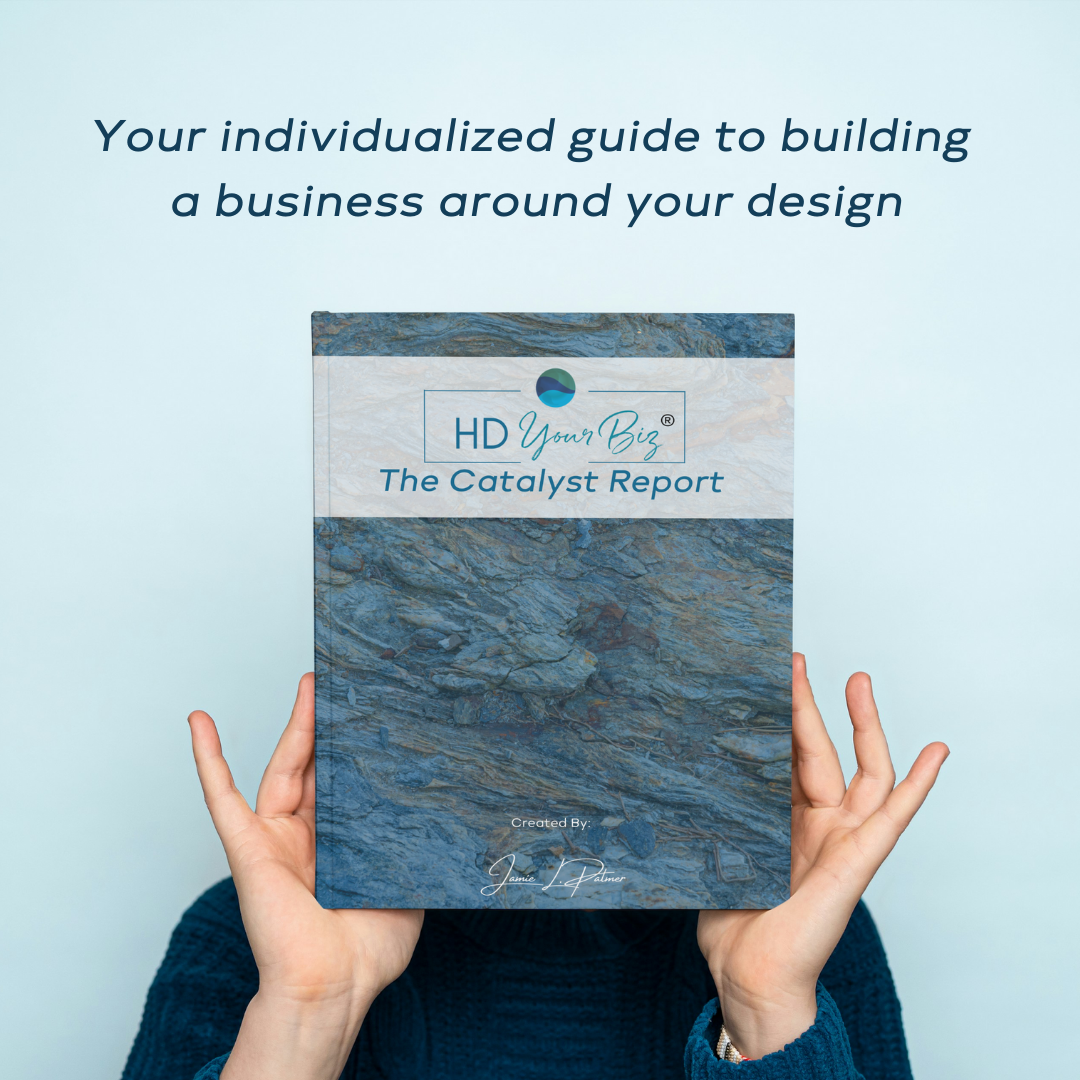
If you want a chart-specific synthesis of your own design, start with the Catalyst Report. If you’re ready to study Human Design at a deeper, more integrated level — especially if you’ve trained elsewhere and felt something was missing — explore HD Wild, the Ecocentric Human Design training and certification program, at hdinthewild.com.
Dig Deeper into Human Design Profiles:
If you’d like to learn more about Human Design Profiles, explore these related lessons and articles.
- Human Design Profile Overview
- 1/3 Researcher Experimenter Profile Human Design
- 1/4 Researcher Mayor Profile Human Design
- 2/4 Introvert Mayor Profile Human Design
- 2/5 Introvert Disruptor Profile Human Design
- 3/5 Experimenter Disruptor Profile Human Design
- 3/6 Experimenter Mentor Profile Human Design
- 4/1 Mayor Researcher Profile Human Design
- 4/6 Mayor Mentor Profile Human Design
- 5/1 Disruptor Researcher Profile Human Design
- 5/2 Disruptor Introvert Profile Human Design
- 6/2 Mentor Introvert Profile Human Design
- 6/3 Mentor Experimenter Profile Human Design
Ecocentric Human Design Presents The Profile Human Design Profiles
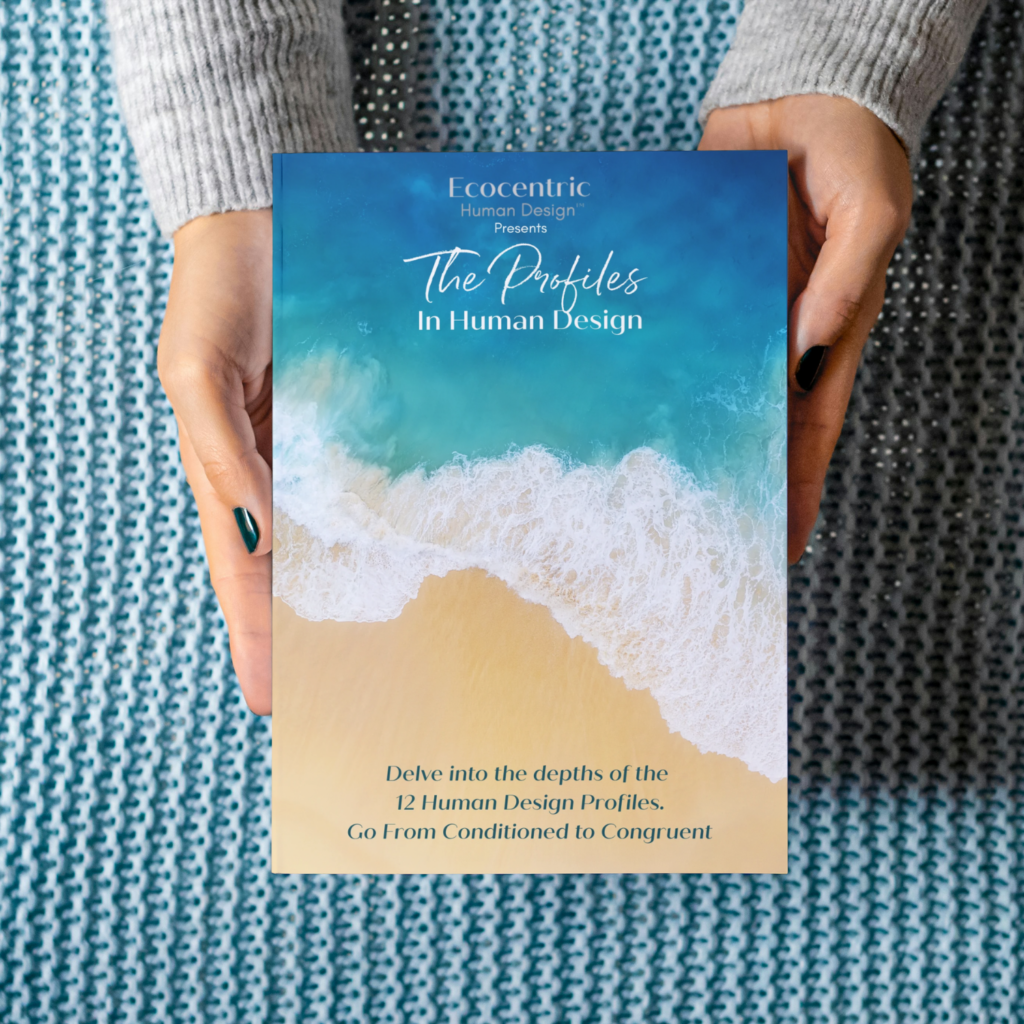 Delve into the nuance, depth and elevated approach to profiles inside of the Ecocentric Human Design Profile Book
Go from conditioned to congruent and get back to the nature of who you are before the world told you who you should be. A deep dive into the human design profiles.
HD Wild - Ecocentric Human Design Training & Certification
 Set the standard for what it means to be HD Informed. Gain mastery, nuance and depth with a practical, elevated and no-nonsense approach to human design.
The 1 year Ecocentric Human Design Training program that supports you in gaining mastery over the human design system. Get access to The Profile Collective – 12 Profile Deep Dive upon enrollment.

Recent Comments