
TL/DR 6/3 Role Model Martyr Profile Human Design
The 6/3 is the Mentor Experimenter in Ecocentric Human Design (Role Model Martyr in traditional Human Design). It’s a right angle profile whose job in the 12-profile cycle is best summed up here: The final profile in the cycle. In its high expression it looks like oscillates fluidly between testing limits, going to the extreme, and observing; in its low expression, watch for extremes: either “testing just to test” with heavy shame after failure, or total avoidance out of a need for perfection.
6/3 Mentor Experimenter: What This Human Design Profile Means for You
In traditional Human Design, the 6/3 is known as the Role Model Martyr. Inside Ecocentric Human Design, Jamie Palmer calls it the Mentor Experimenter — because a label alone never tells the full story. You are here to taste all that life has to offer — you see possibilities where others see an end.
This is video 13 of 13 in Jamie’s Human Design Profile Series, a project built to correct what she sees as one of the biggest gaps in the Human Design space: most teaching treats a profile as a fixed personality trait, when it’s actually a role inside a living, 12-profile cycle. Understanding your role — not just your label — is what makes this information usable, whether you’re navigating a relationship, a team, or your own business.
Where the 6/3 Sits in the Human Design Profile Cycle
The final profile in the cycle. The 6/3 takes the threshold the 6/2 opened and experiments with it — pushing the limits of what’s possible on the material plane, then handing the results to the 1/3 to start the cycle over again. This is, by Jamie’s own admission, a messy process from the outside — one of two extremes tends to dominate: “I’m just testing, it’s just a test” recklessness, or perfectionist paralysis that never tests anything at all.
Every profile exists in relationship to the ones before and after it in the cycle. Understanding this context is what separates a surface-level Human Design read from one that’s actually useful: the 6/3 isn’t operating in a vacuum, it’s playing a specific, necessary part in a much bigger collective process.
6/3 High Expression: What It Looks Like When You’re Living It
When a 6/3 is congruent with their design, a few consistent patterns tend to show up:
- Oscillates fluidly between testing limits, going to the extreme, and observing
- Has found a partner or people to do life with, and some level of allegiance to those around them
- Owns the messiness of their process instead of hiding it
- Closes the loop on what no longer works so a new foundation can be built
None of these traits are things a 6/3 has to force. They’re closer to what becomes available once the conditions are right — which is exactly why the low expression patterns below matter just as much to understand.
6/3 Role Model Martyr Profile Human Design Low Expression: Not-Self Patterns to Watch For
On the flip side, here’s what tends to show up when a 6/3 is out of alignment, conditioned, or operating from pressure rather than their own strategy and authority:
- Extremes: either “testing just to test” with heavy shame after failure, or total avoidance out of a need for perfection
- Feels a chronic sense of “what’s wrong with me” when relationships, jobs, or projects don’t stick
- Rejects people, places, or things because they aren’t perfect or don’t feel fully safe
- Cycles between the two extremes rather than settling into either
If several of these feel familiar, that’s not a character flaw — it’s information. It usually means this profile is being asked (by others, by circumstance, or by old conditioning) to operate outside the role it’s actually built for.
How the 6/3 Role Model Martyr Profile Human Design Shows Up in Business
Applied to business, the 6/3 isn’t a marketing template — it’s a description of how this person is actually wired to build trust and create impact. Because the final profile in the cycle, a 6/3 in business tends to do their best work when they lean into oscillates fluidly between testing limits, going to the extreme, and observing. Where it goes sideways is predictable too: when the pressure of running a business pushes them toward extremes: either “testing just to test” with heavy shame after failure, or total avoidance out of a need for perfection, the business itself starts to feel like it’s working against them instead of with them. The fix is rarely a new funnel or a new offer — it’s usually a return to what this profile is actually here to do in the cycle.
Common Myths About the 6/3 Role Model Martyr Profile Human Design
The biggest misread on the 6/3 comes from treating “Role Model Martyr” as a fixed personality type instead of a role. The traditional label can sound like a life sentence — like you either are that thing or you’re failing at it. Ecocentric Human Design reframes it as the Mentor Experimenter: not a static identity, but a function this person plays inside a larger, moving cycle. The myth to drop is the idea that living out this profile means performing a stereotype. The reality is closer to: feels a chronic sense of “what’s wrong with me” when relationships, jobs, or projects don’t stick is what happens when the role is misunderstood or forced — not what the profile “is.”
Journal Prompts for the 6/3 Role Model Martyr Profile Human Design
If you want to start moving from conditioning to congruence with this profile, sit with these questions — ideally in writing, and ideally more than once:
- What did I learn?
- Am I leading and honoring my strategy and authority?
- Have I healed the wounds from my phase one?
- Am I fluidly moving between testing and observation in all areas of my life?
Frequently Asked Questions
What is the 6/3 profile in Human Design?
The 6/3 is called the Role Model Martyr in traditional Human Design and the Mentor Experimenter in Ecocentric Human Design. It is a right angle profile, meaning this person needs to do work they personally identify with in order to live out their high expression.
What is the 6/3’s role in the profile cycle?
The final profile in the cycle. The 6/3 takes the threshold the 6/2 opened and experiments with it — pushing the limits of what’s possible on the material plane, then handing the results to the 1/3 to start the cycle over again.
What does the 6/3 look like in its low expression?
Extremes: either “testing just to test” with heavy shame after failure, or total avoidance out of a need for perfection
How does the 6/3 profile show up in business or work?
A 6/3 tends to build trust and traction by oscillates fluidly between testing limits, going to the extreme, and observing. When they instead try to operate outside that role — forcing a strategy that isn’t native to how they’re wired — the low-expression patterns like extremes: either “testing just to test” with heavy shame after failure, or total avoidance out of a need for perfection tend to show up fast, usually as burnout or a stalled offer.
What is a common misconception about the 6/3 profile?
That the traditional label — the Role Model Martyr — is a fixed personality type rather than a role inside a larger cycle. In Ecocentric Human Design, the Mentor Experimenter framing exists specifically to correct that: this profile is something you do, in relationship to the other 11 profiles, not just something you are.
Go Deeper with the Investigator Martyr Profile Human Design
If this resonated, order the Ecocentric Human Design Profiles book,
Dive into the full profile deep dive — three-plus hours of training and somatic exercises to help you move from conditioning to congruence with your 6/3 profile in human design.
Ready to build a business around your actual design? Order a HD Your Biz – Catalyst Report
Set the standard for what it means to be HD Informed, elevate the depth and nuance of Ecocentric Human Design by getting trained and certifed in the HD Wild
Dig Deeper into Human Design Profiles:
If you’d like to learn more about Human Design Profiles, explore these related lessons and articles.
- Human Design Profile Overview
- 1/3 Researcher Experimenter Profile Human Design
- 1/4 Researcher Mayor Profile Human Design
- 2/4 Introvert Mayor Profile Human Design
- 2/5 Introvert Disruptor Profile Human Design
- 3/5 Experimenter Disruptor Profile Human Design
- 3/6 Experimenter Mentor Profile Human Design
- 4/1 Mayor Researcher Profile Human Design
- 4/6 Mayor Mentor Profile Human Design
- 5/1 Disruptor Researcher Profile Human Design
- 5/2 Disruptor Introvert Profile Human Design
- 6/2 Mentor Introvert Profile Human Design
- 6/3 Mentor Experimenter Profile Human Design
Ecocentric Human Design Presents The Profile Human Design Profiles
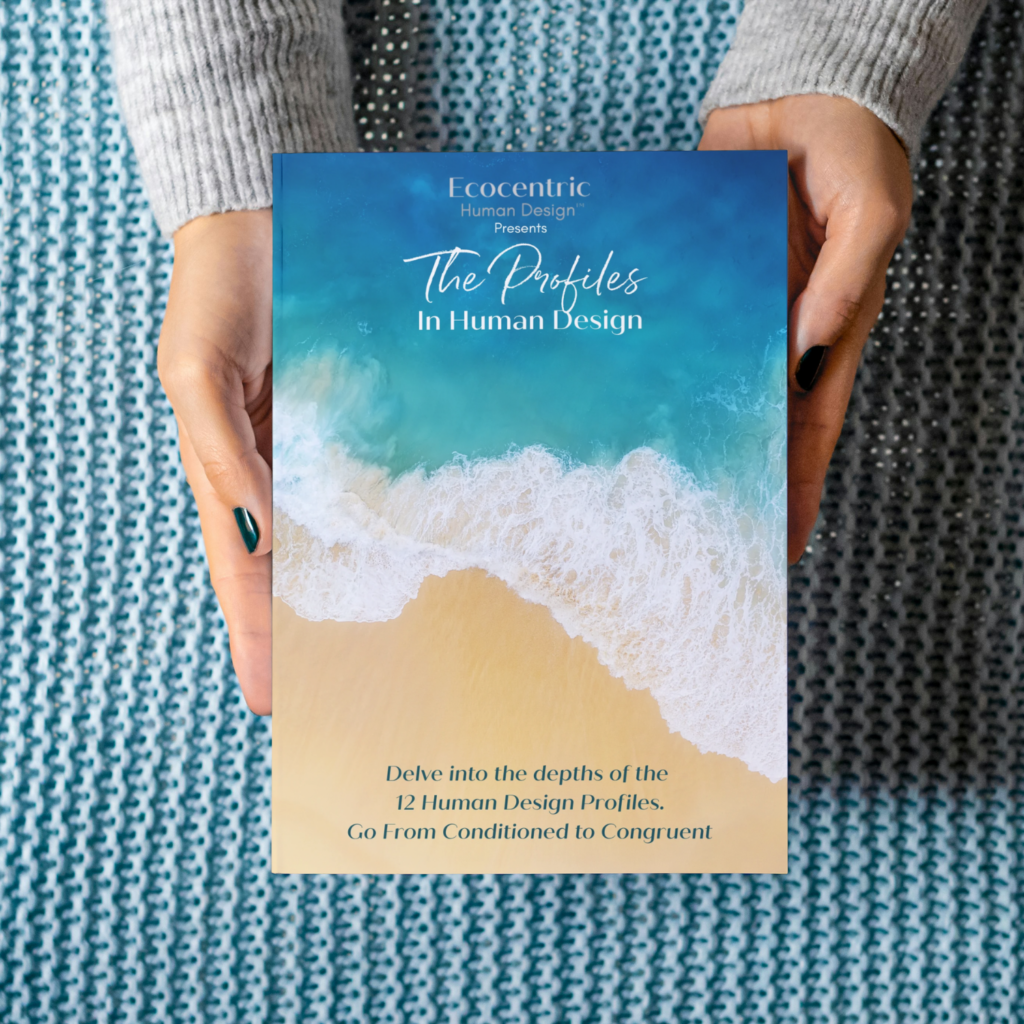 Delve into the nuance, depth and elevated approach to profiles inside of the Ecocentric Human Design Profile Book
Go from conditioned to congruent and get back to the nature of who you are before the world told you who you should be. A deep dive into the human design profiles.
HD Wild - Ecocentric Human Design Training & Certification
 Set the standard for what it means to be HD Informed. Gain mastery, nuance and depth with a practical, elevated and no-nonsense approach to human design.
The 1 year Ecocentric Human Design Training program that supports you in gaining mastery over the human design system. Get access to The Profile Collective – 12 Profile Deep Dive upon enrollment.



Recent Comments